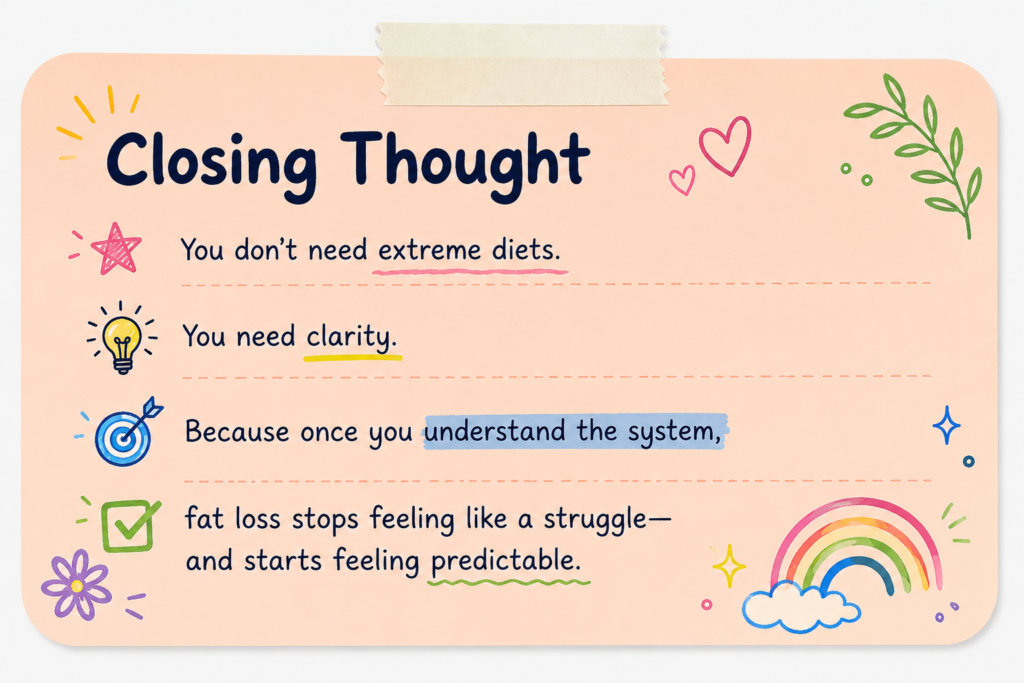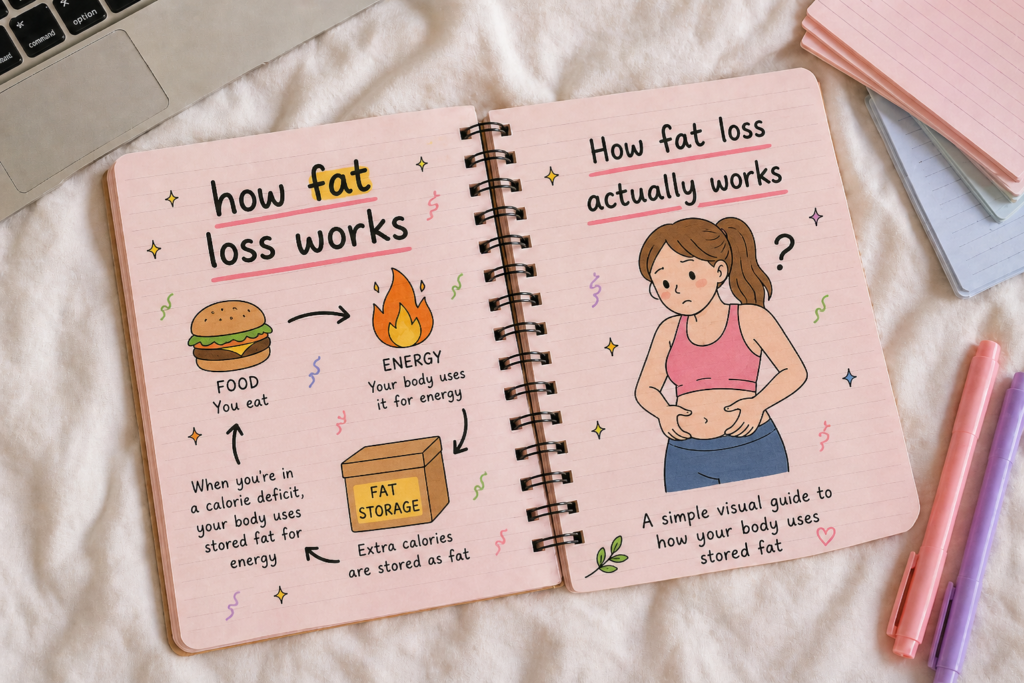
You’re not bad at dieting—your body is doing exactly what it’s designed to do
Fat loss often feels confusing because people treat it like a willpower problem.
It’s not.
Your body is a biological system built for survival, not aesthetics.
So when food intake changes, your body doesn’t “panic”—it adapts.
Understanding that adaptation is the key to fat loss.
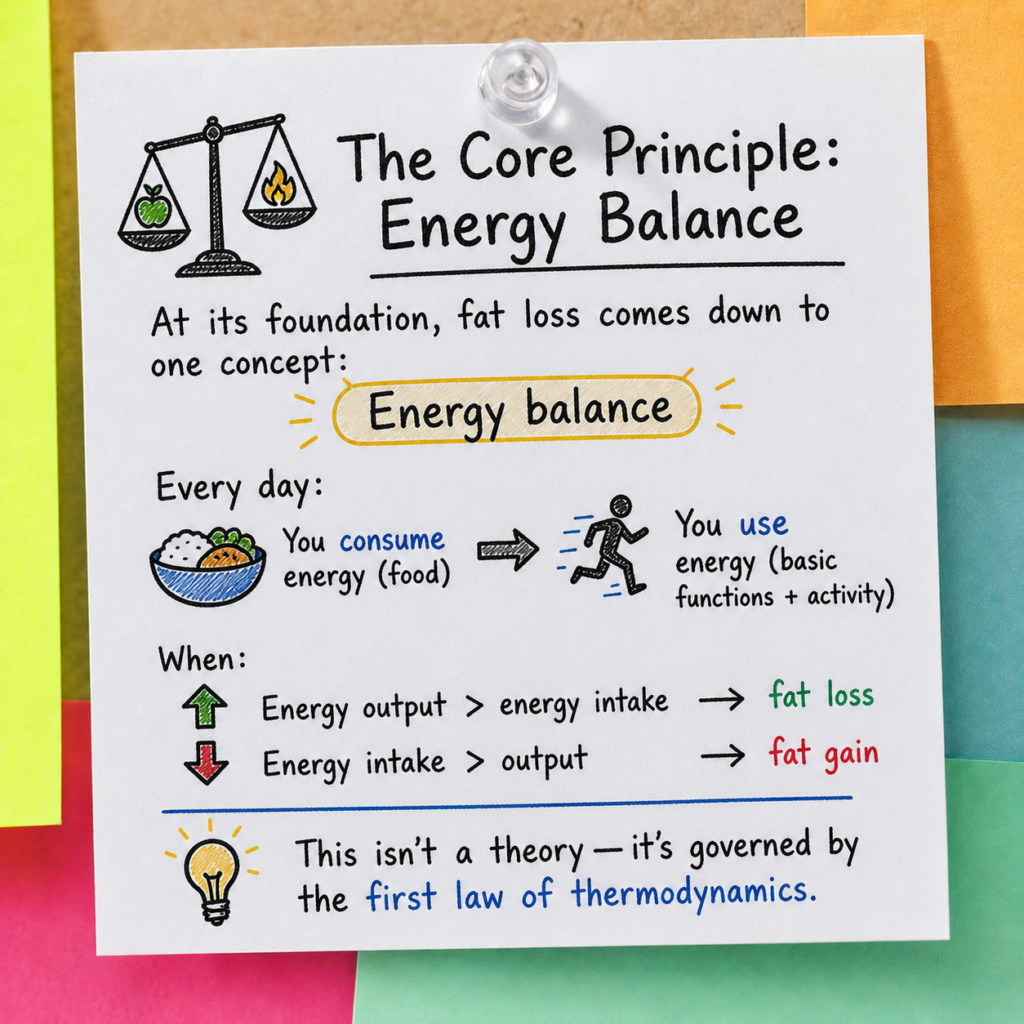
The Core Principle: Energy Balance
At its foundation, fat loss comes down to one concept:
Energy balance
Every day:
- You consume energy (food)
- You use energy (basic functions + activity)
When:
- Energy output > energy intake → fat loss
- Energy intake > output → fat gain
This isn’t a theory—it’s governed by the first law of thermodynamics.
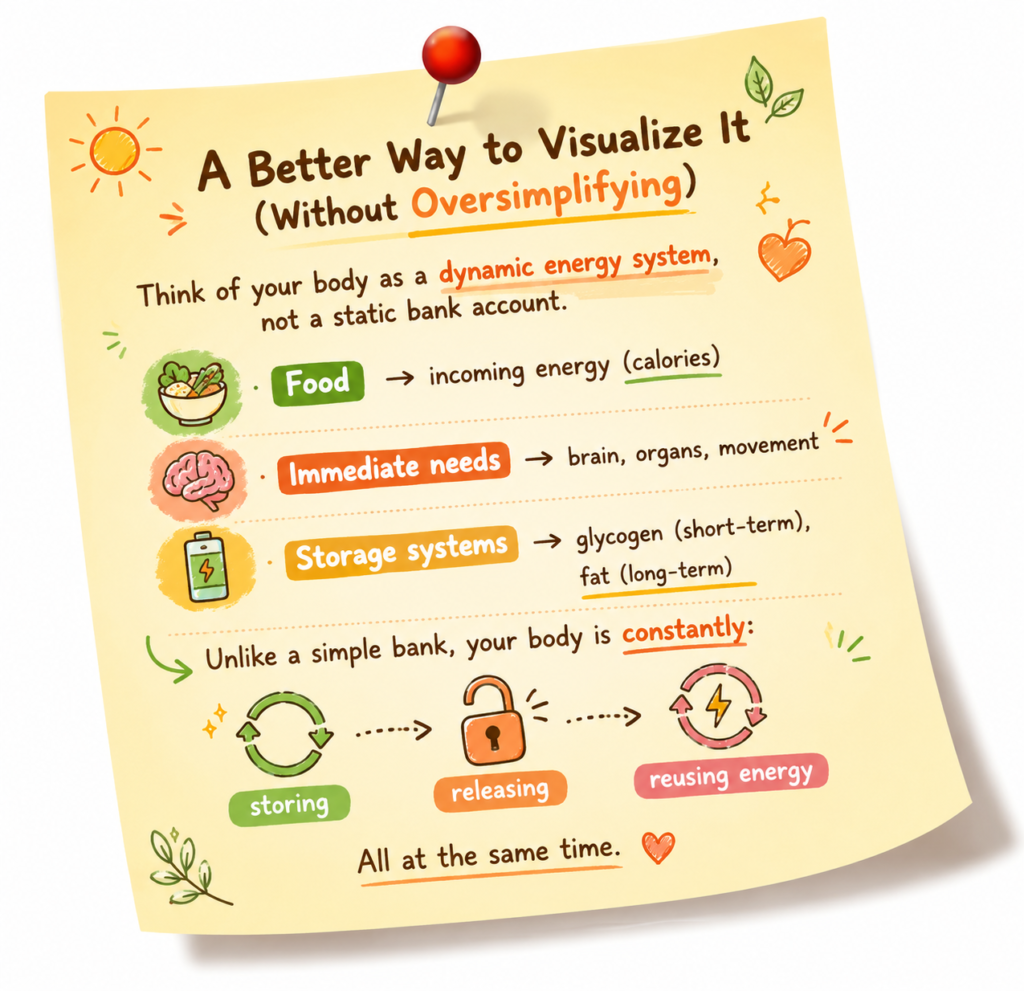
A Better Way to Visualize It (Without Oversimplifying)
Think of your body as a dynamic energy system, not a static bank account.
- Food → incoming energy (calories)
- Immediate needs → brain, organs, movement
- Storage systems → glycogen (short-term), fat (long-term)
Unlike a simple bank, your body is constantly:
- storing
- releasing
- reusing energy
All at the same time.
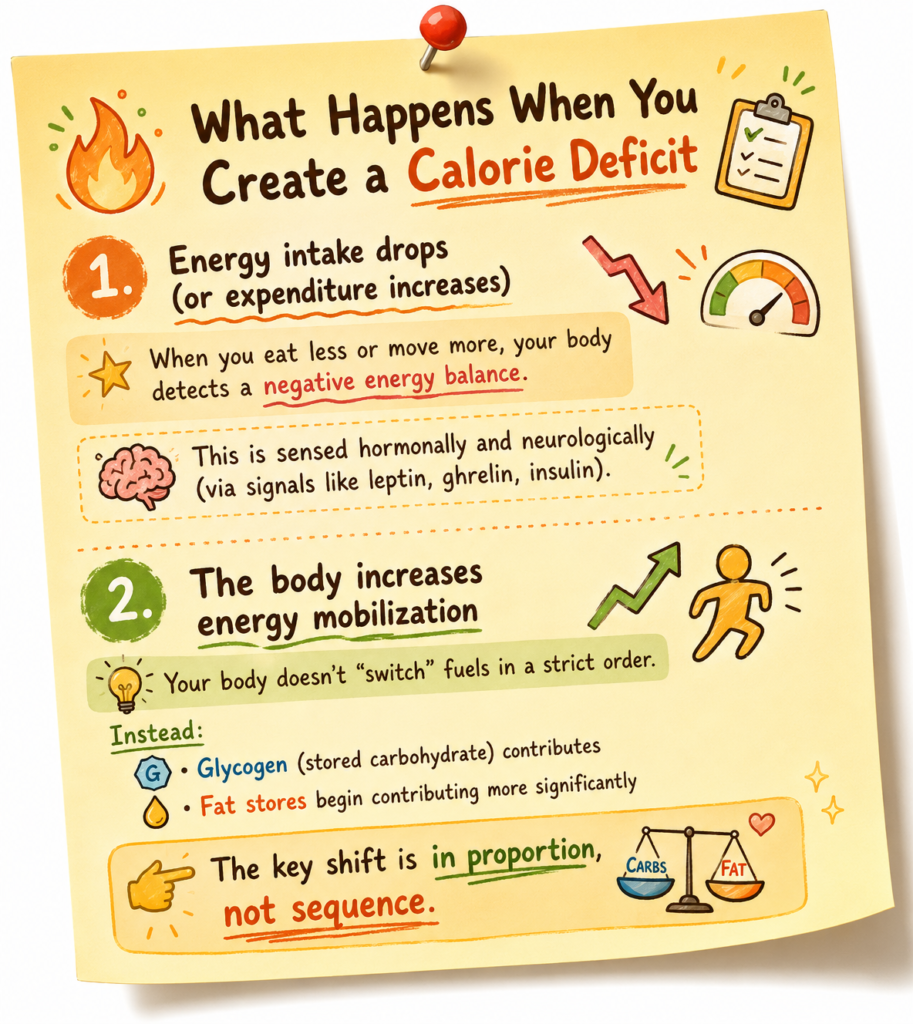
What Happens When You Create a Calorie Deficit
1. Energy intake drops (or expenditure increases)
When you eat less or move more, your body detects a negative energy balance.
This is sensed hormonally and neurologically (via signals like leptin, ghrelin, insulin).
2. The body increases energy mobilization
Your body doesn’t “switch” fuels in a strict order.
Instead:
- Glycogen (stored carbohydrate) contributes
- Fat stores begin contributing more significantly
- Protein (muscle) may be used if conditions are poor
👉 The key shift is in proportion, not sequence.
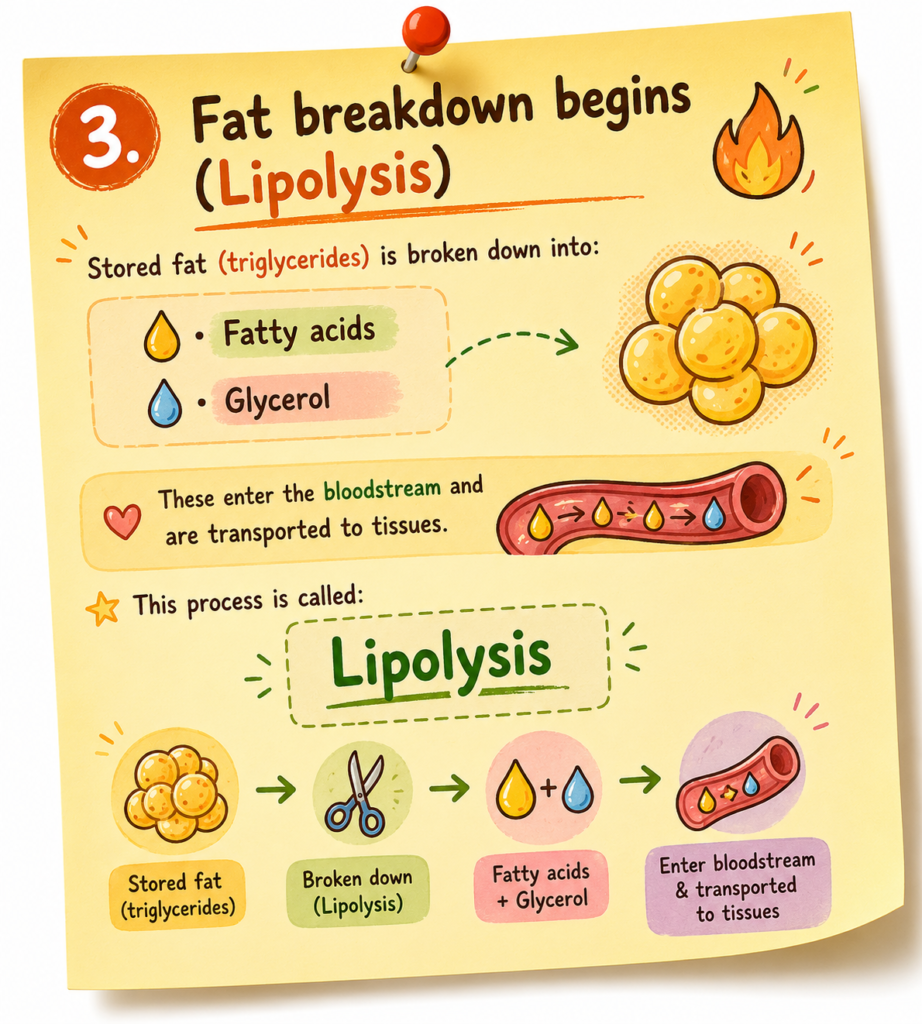
3. Fat breakdown begins (Lipolysis)
Stored fat (triglycerides) is broken down into:
- Fatty acids
- Glycerol
These enter the bloodstream and are transported to tissues.
This process is called:
Lipolysis
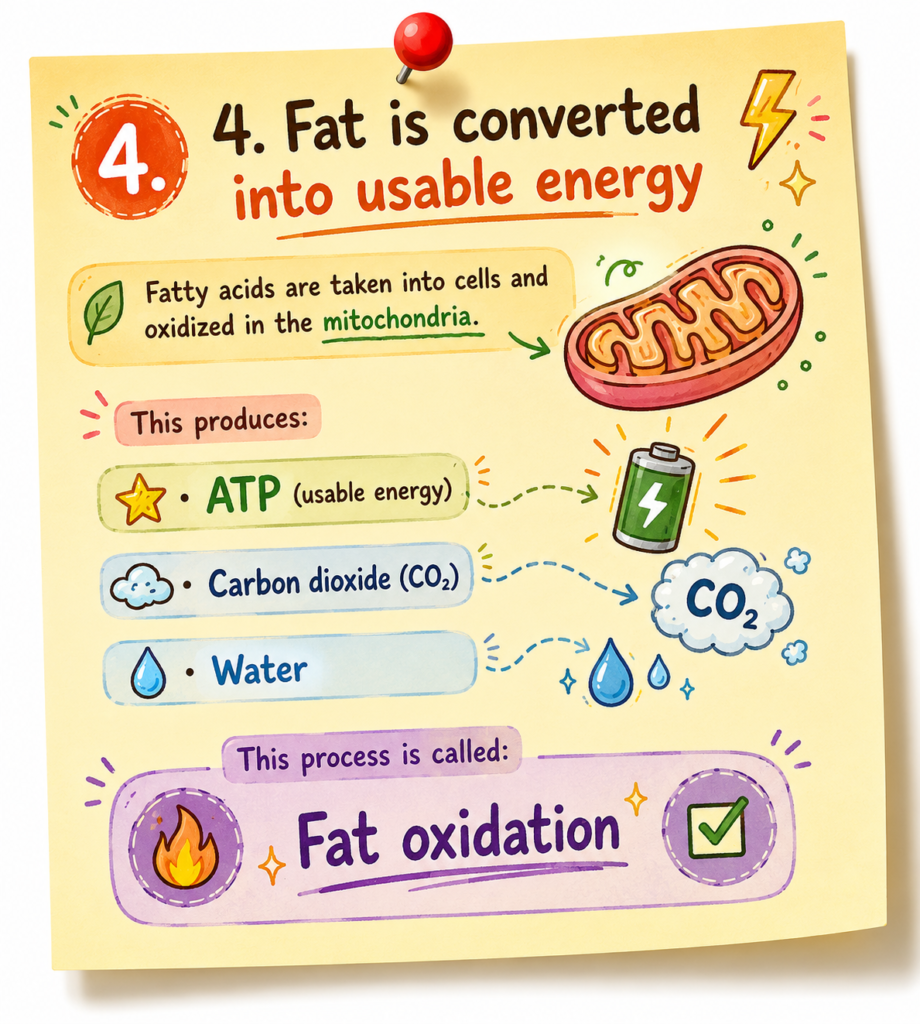
4. Fat is converted into usable energy
Fatty acids are taken into cells and oxidized in the mitochondria.
This produces:
- ATP (usable energy)
- Carbon dioxide (CO₂)
- Water
This is known as:
Fat oxidation
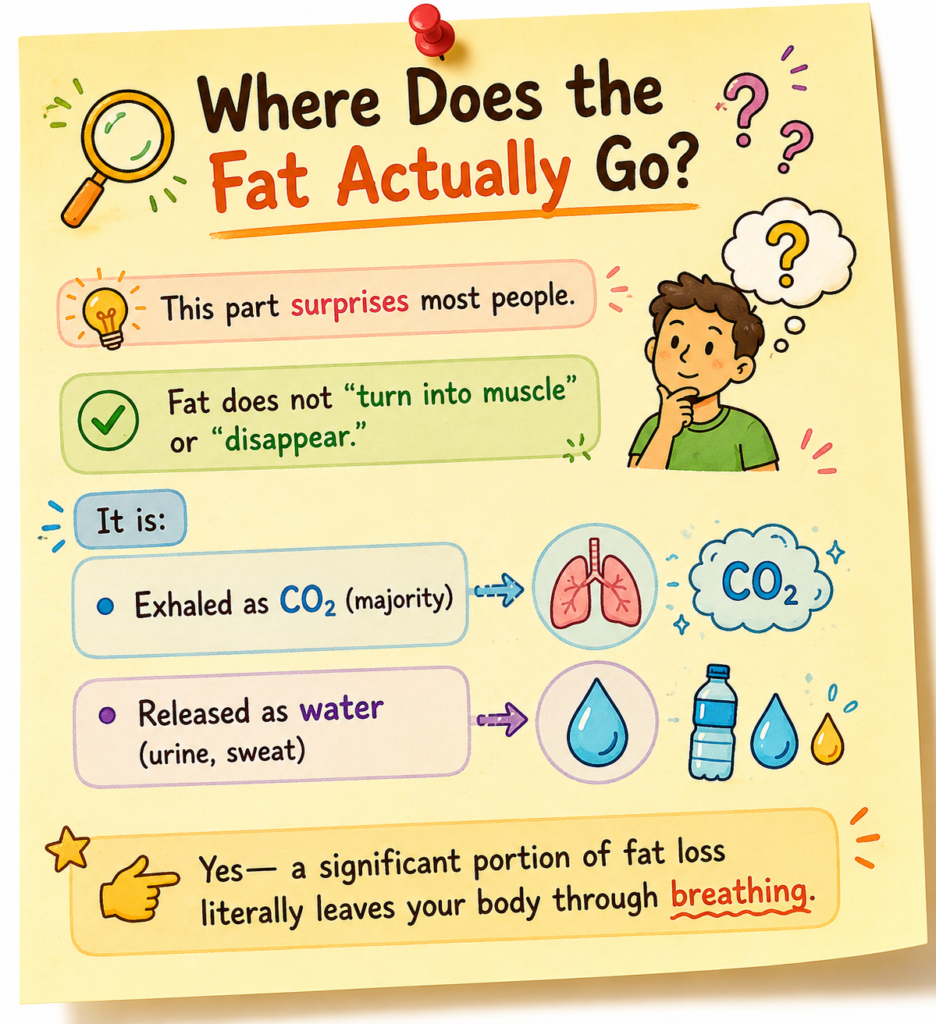
Where Does the Fat Actually Go?
This part surprises most people.
Fat does not “turn into muscle” or “disappear.”
It is:
- Exhaled as CO₂ (majority)
- Released as water (urine, sweat)
👉 Yes—a significant portion of fat loss literally leaves your body through breathing
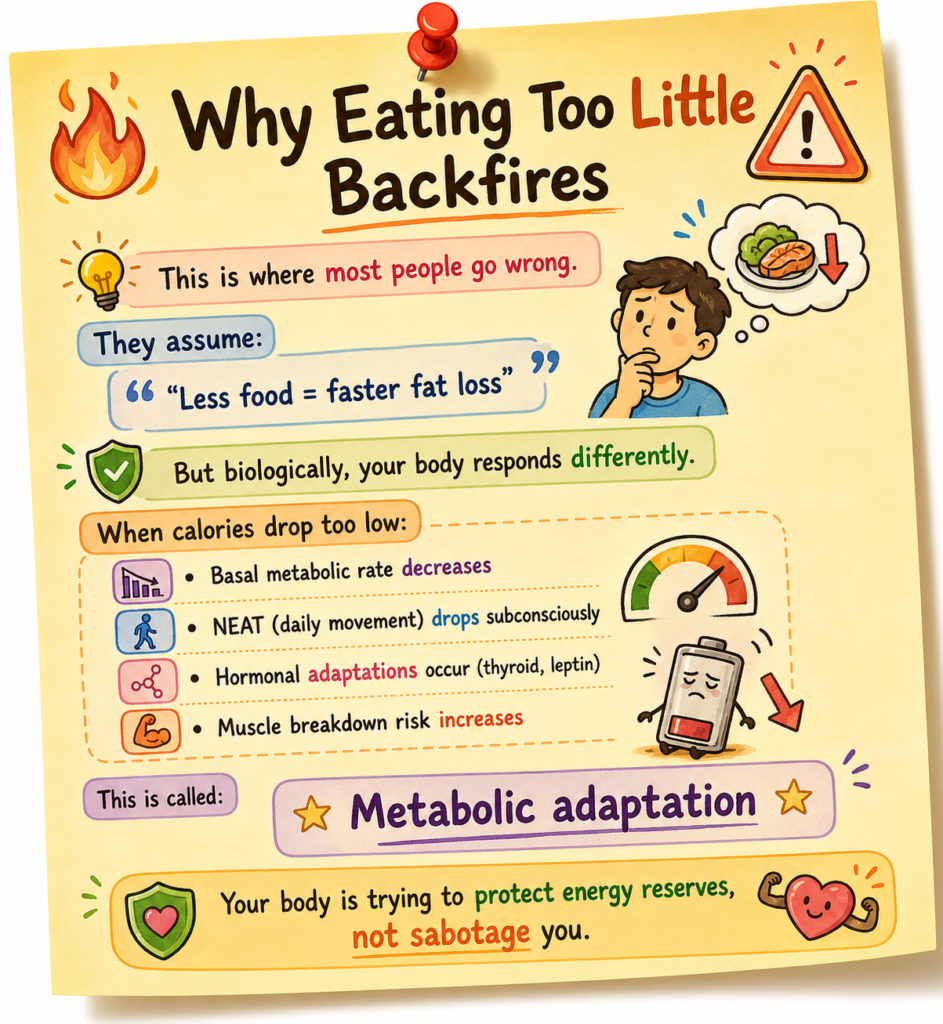
Why Eating Too Little Backfires
This is where most people go wrong.
They assume:
“Less food = faster fat loss”
But biologically, your body responds differently.
When calories drop too low:
- Basal metabolic rate decreases
- NEAT (daily movement) drops subconsciously
- Hormonal adaptations occur (thyroid, leptin)
- Muscle breakdown risk increases
This is called:
Metabolic adaptation
Your body is trying to protect energy reserves, not sabotage you.
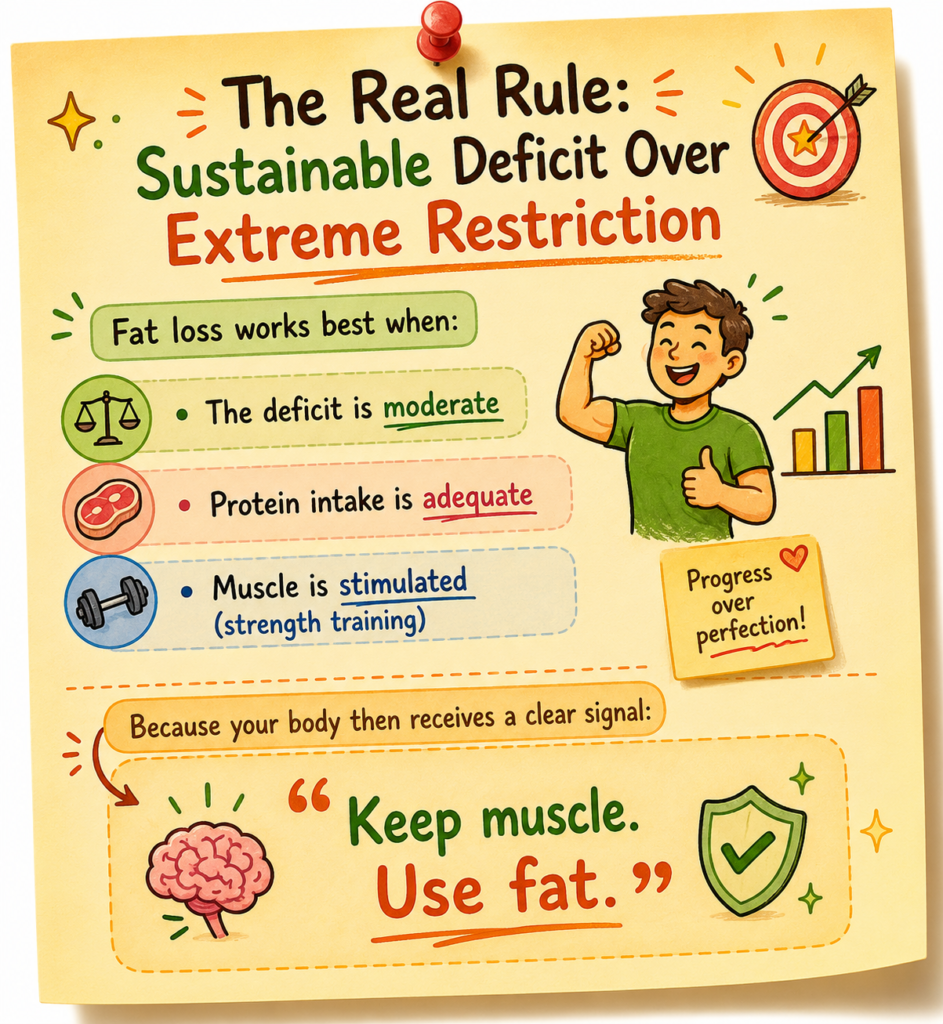
The Real Rule: Sustainable Deficit Over Extreme Restriction
Fat loss works best when:
- The deficit is moderate
- Protein intake is adequate
- Muscle is stimulated (strength training)
Because your body then receives a clear signal:
“Keep muscle. Use fat.”
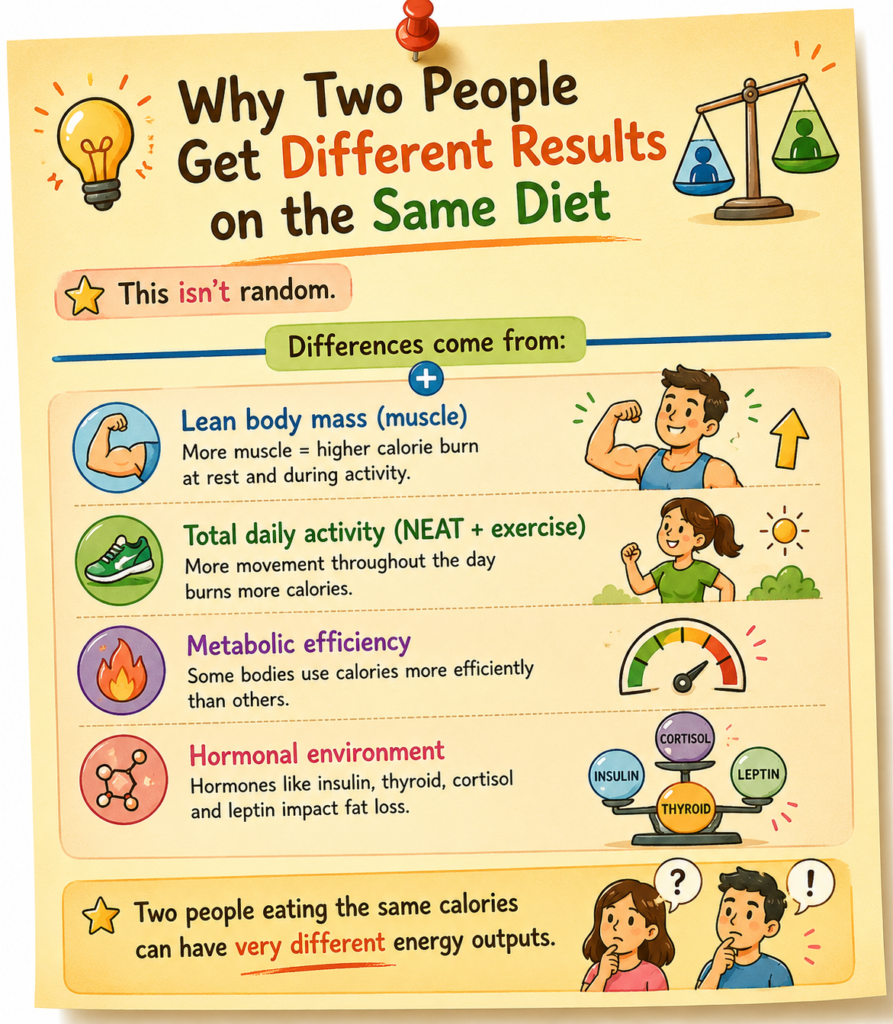
Why Two People Get Different Results on the Same Diet
This isn’t random.
Differences come from:
- Lean body mass (muscle)
- Total daily activity (NEAT + exercise)
- Metabolic efficiency
- Hormonal environment
Two people eating the same calories can have very different energy outputs.
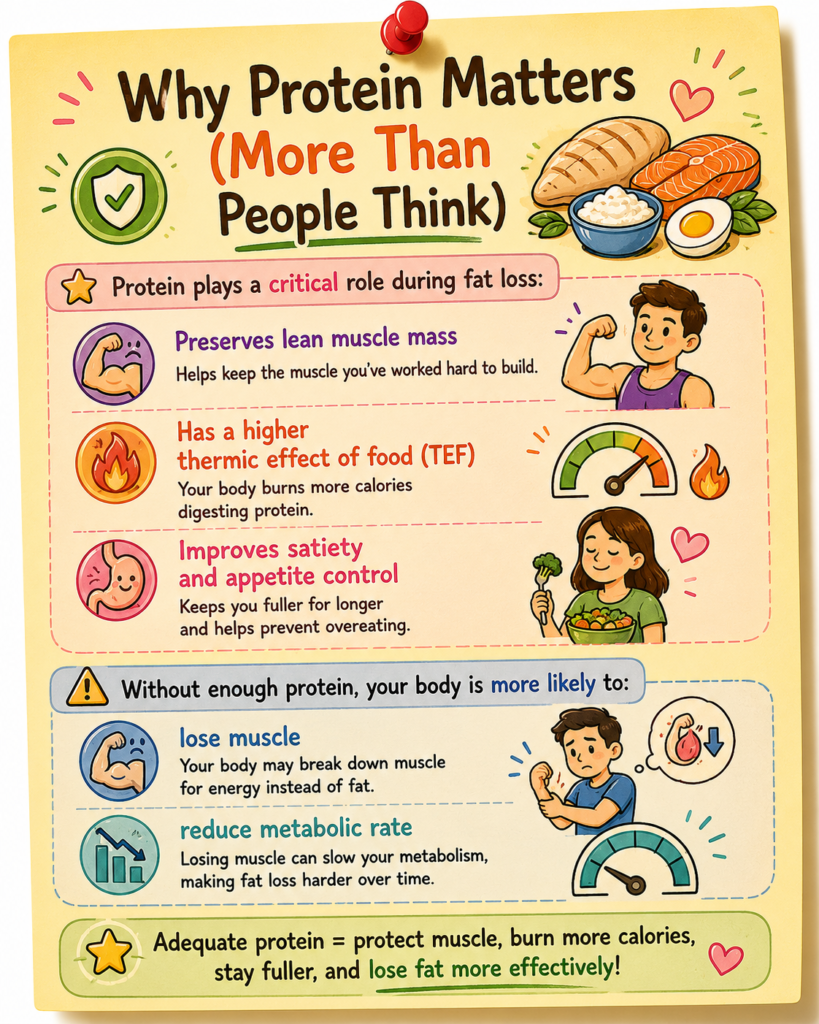
Why Protein Matters (More Than People Think)
Protein plays a critical role during fat loss:
- Preserves lean muscle mass
- Has a higher thermic effect of food (TEF)
- Improves satiety and appetite control
Without enough protein, your body is more likely to:
- lose muscle
- reduce metabolic rate
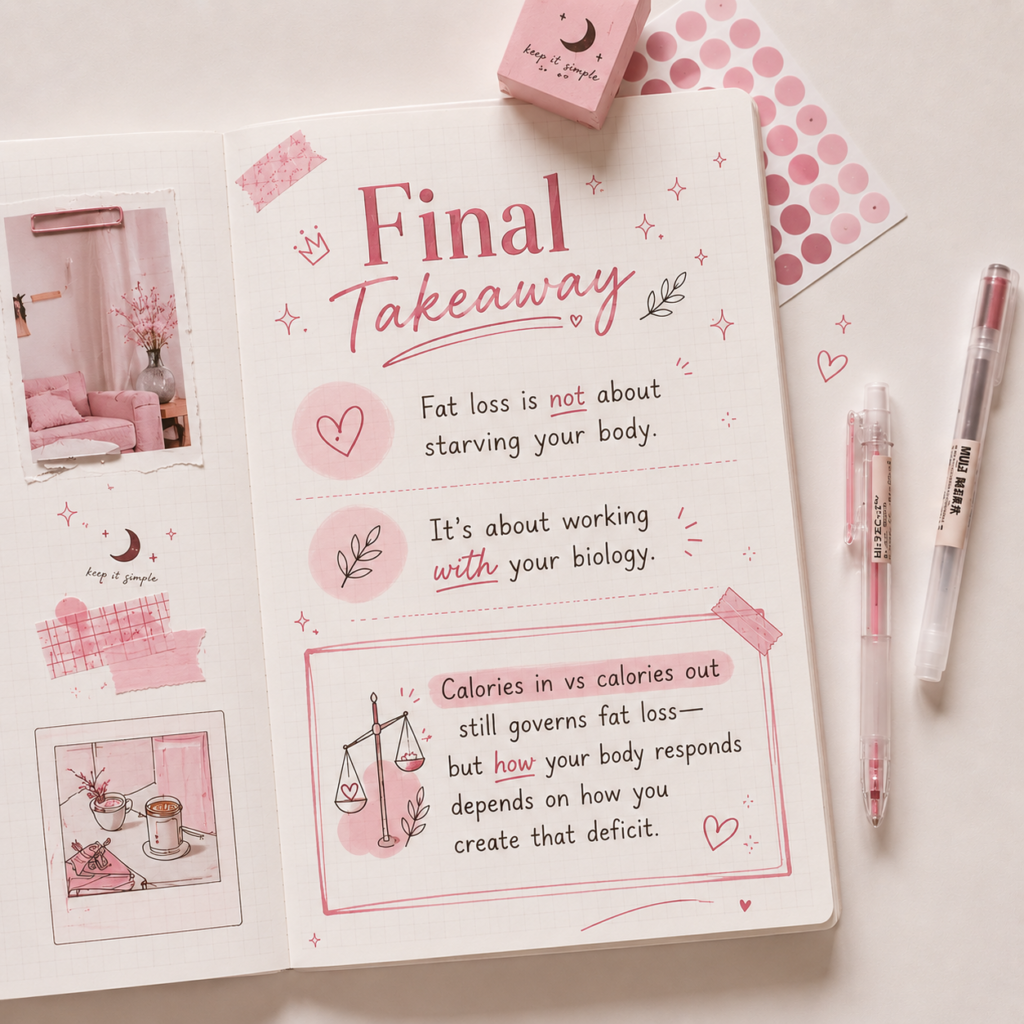
Final Takeaway
Fat loss is not about starving your body.
It’s about working with your biology.
Calories in vs calories out still governs fat loss—
but how your body responds depends on how you create that deficit.
✨ Practical Direction
👉 Not sure how many calories your body actually needs?
Try the Daily Calorie Calculator →👉 Want to understand why your metabolism feels “slow”?
Learn How Metabolism Controls Calorie Burn →👉 Confused about protein intake?
How Much Protein Do You Actually Need? →