
Understanding Metabolism
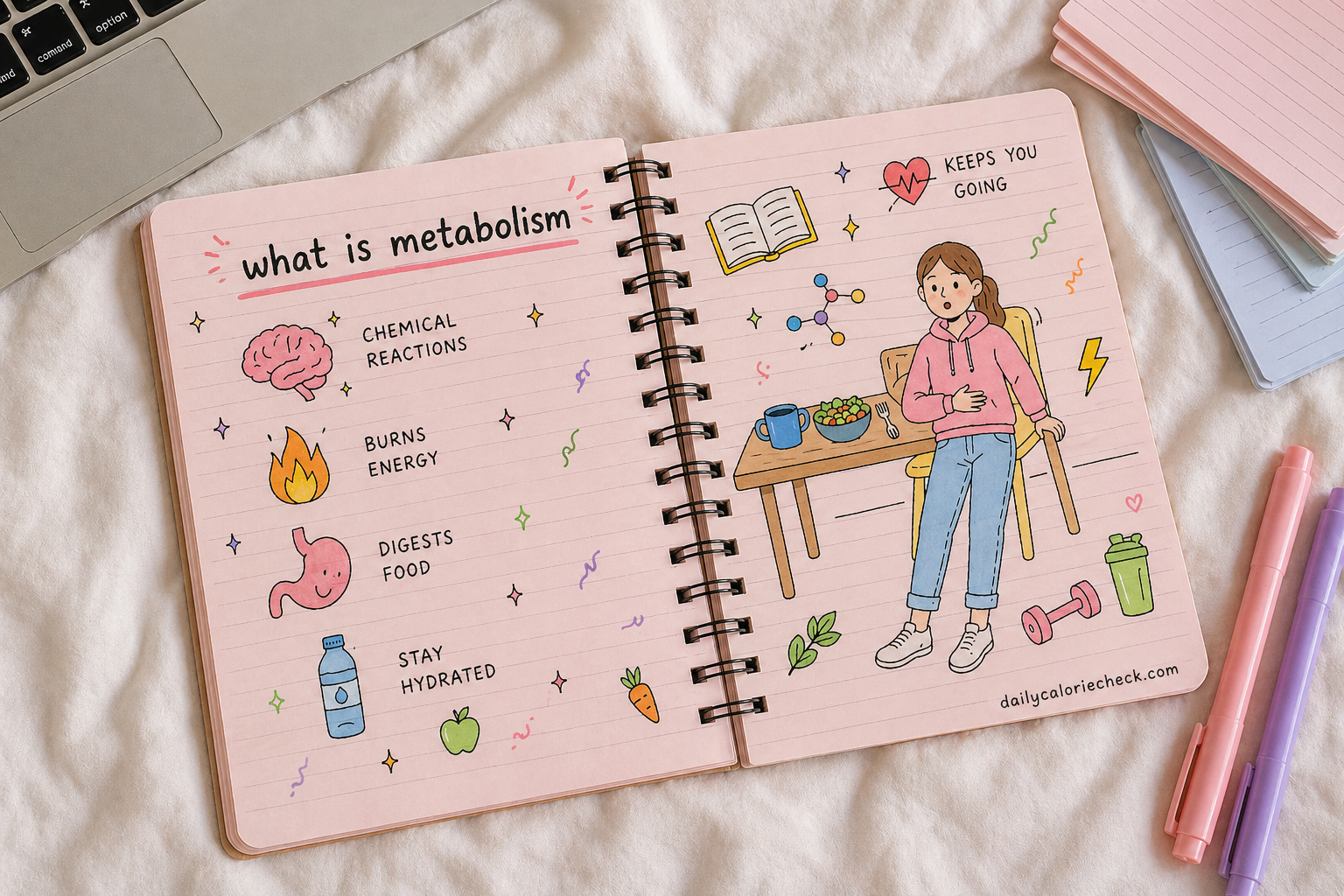
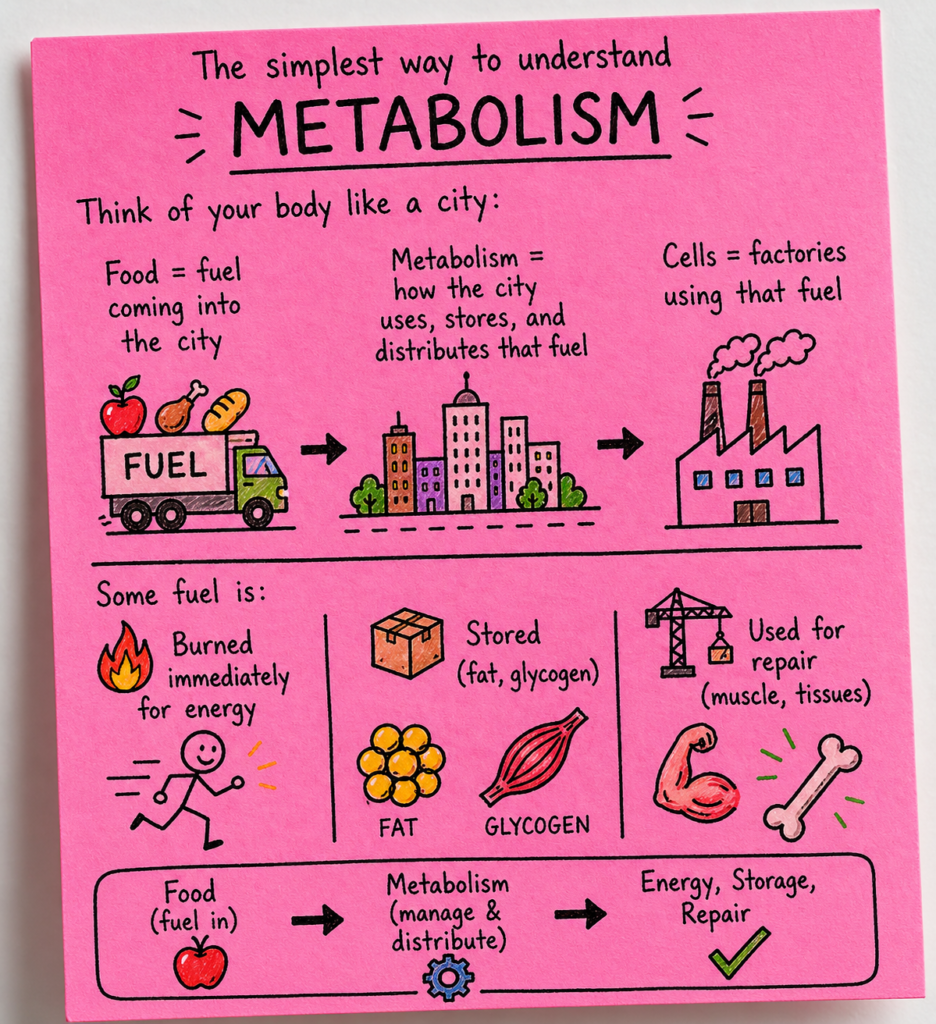
The simplest way to understand it
Think of your body like a city:
- Food = fuel coming into the city
- Metabolism = how the city uses, stores, and distributes that fuel
- Cells = factories using that fuel
Some fuel is:
(fat, glycogen)
(muscle, tissues)
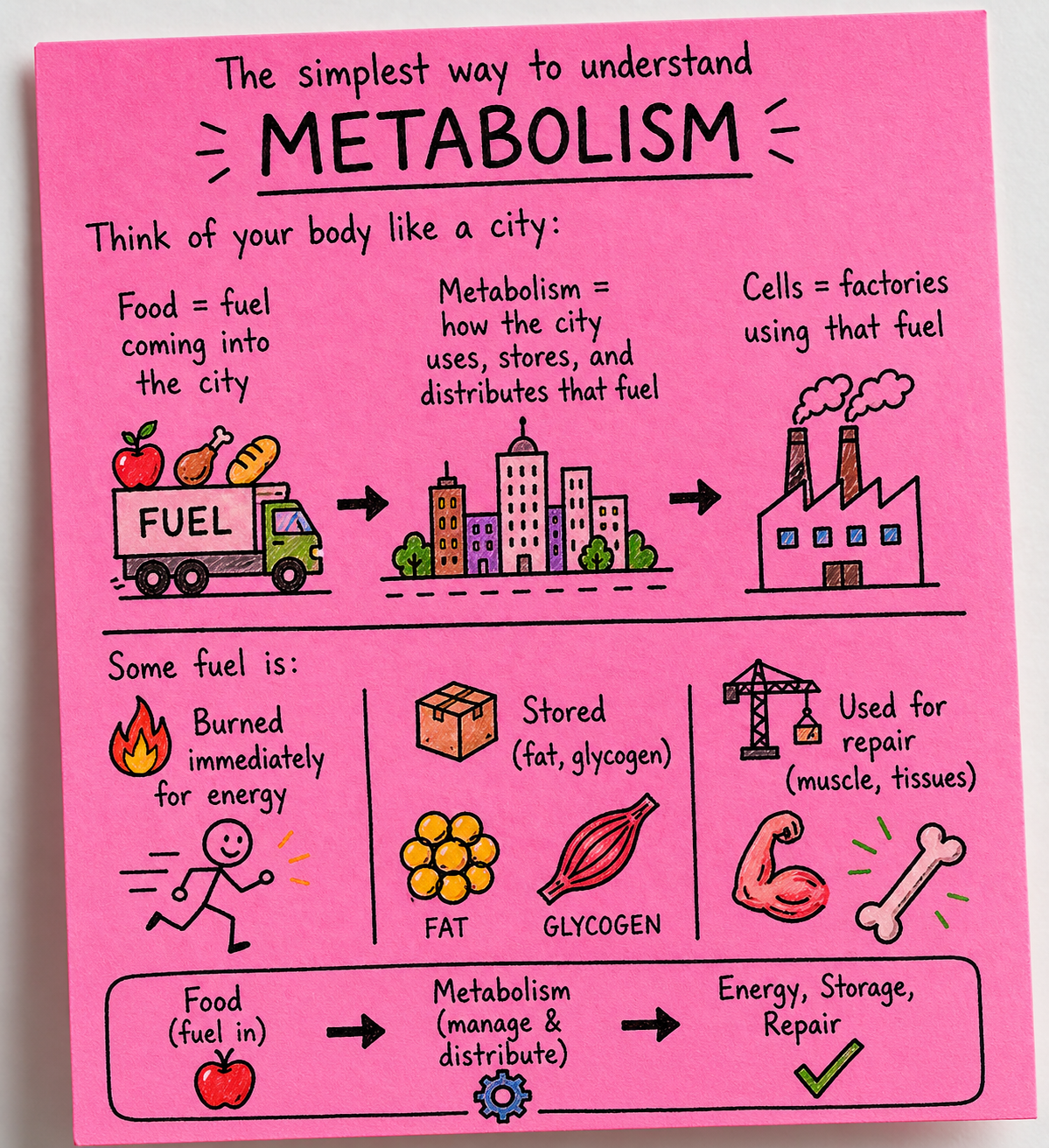
🔥 The 3 main parts of metabolism
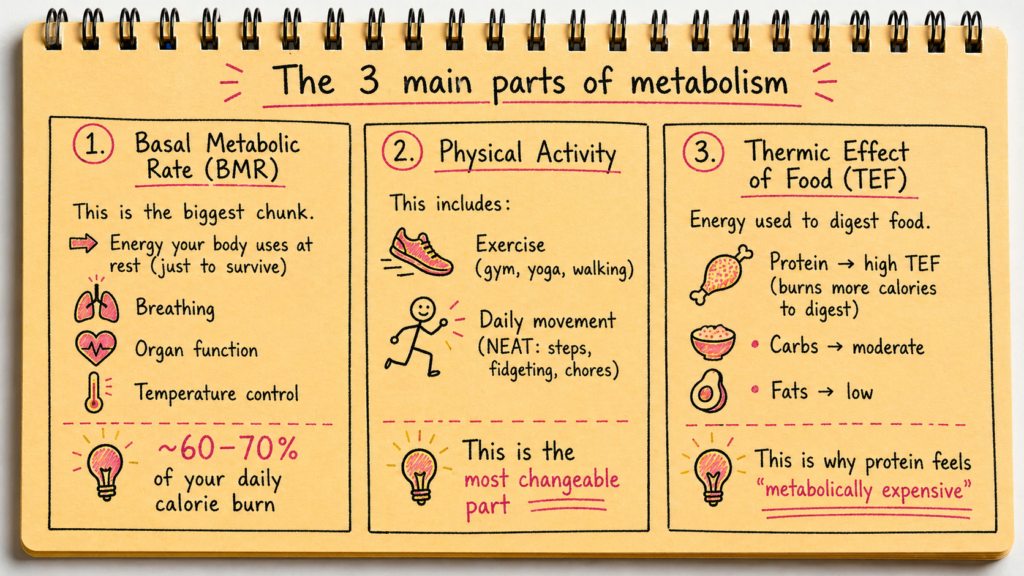
1. Basal Metabolic Rate (BMR)
This is the biggest chunk.
- Breathing
- Organ function
- Temperature control
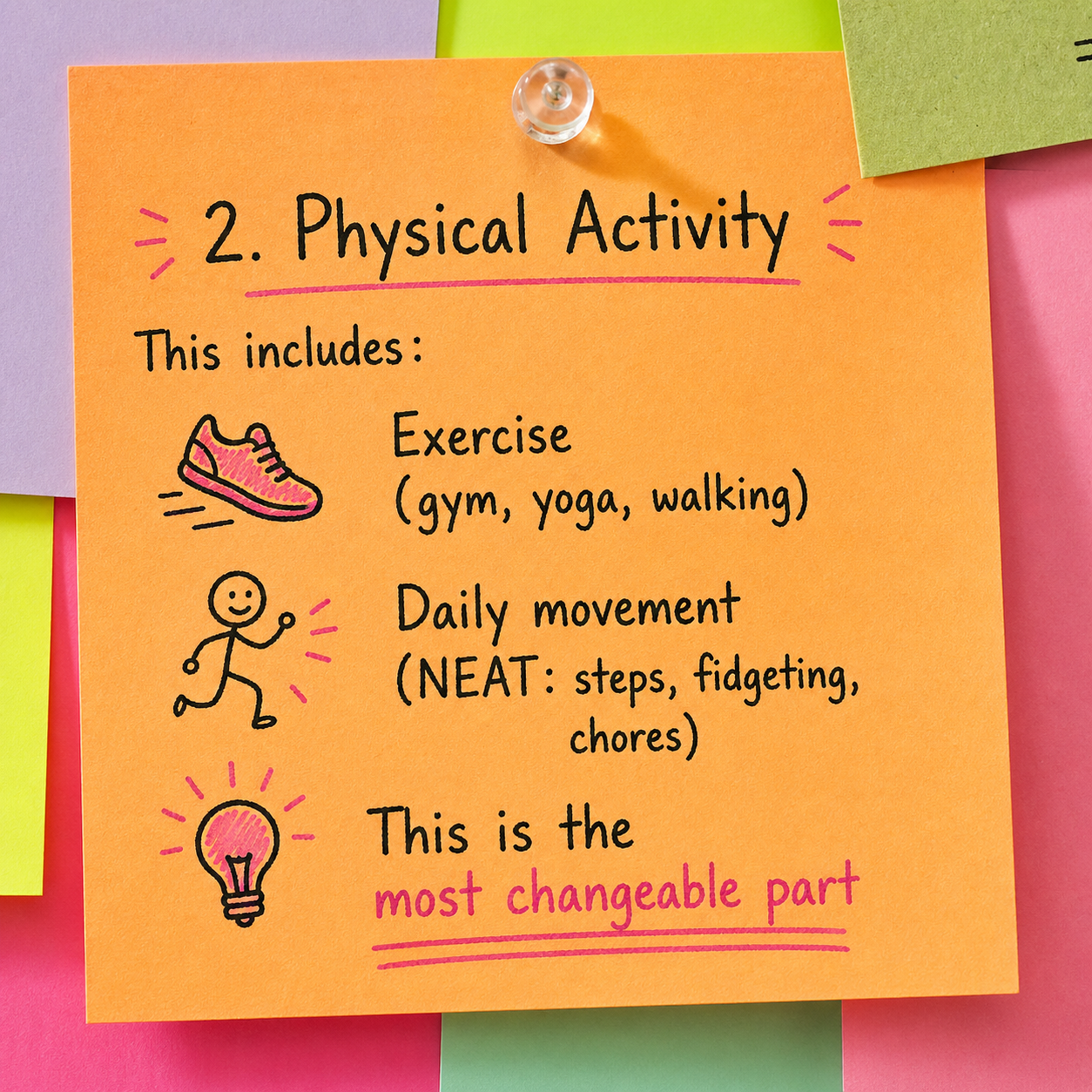
2. Physical Activity
This includes:
- Exercise (gym, yoga, walking)
- Daily movement (NEAT: steps, fidgeting, chores)
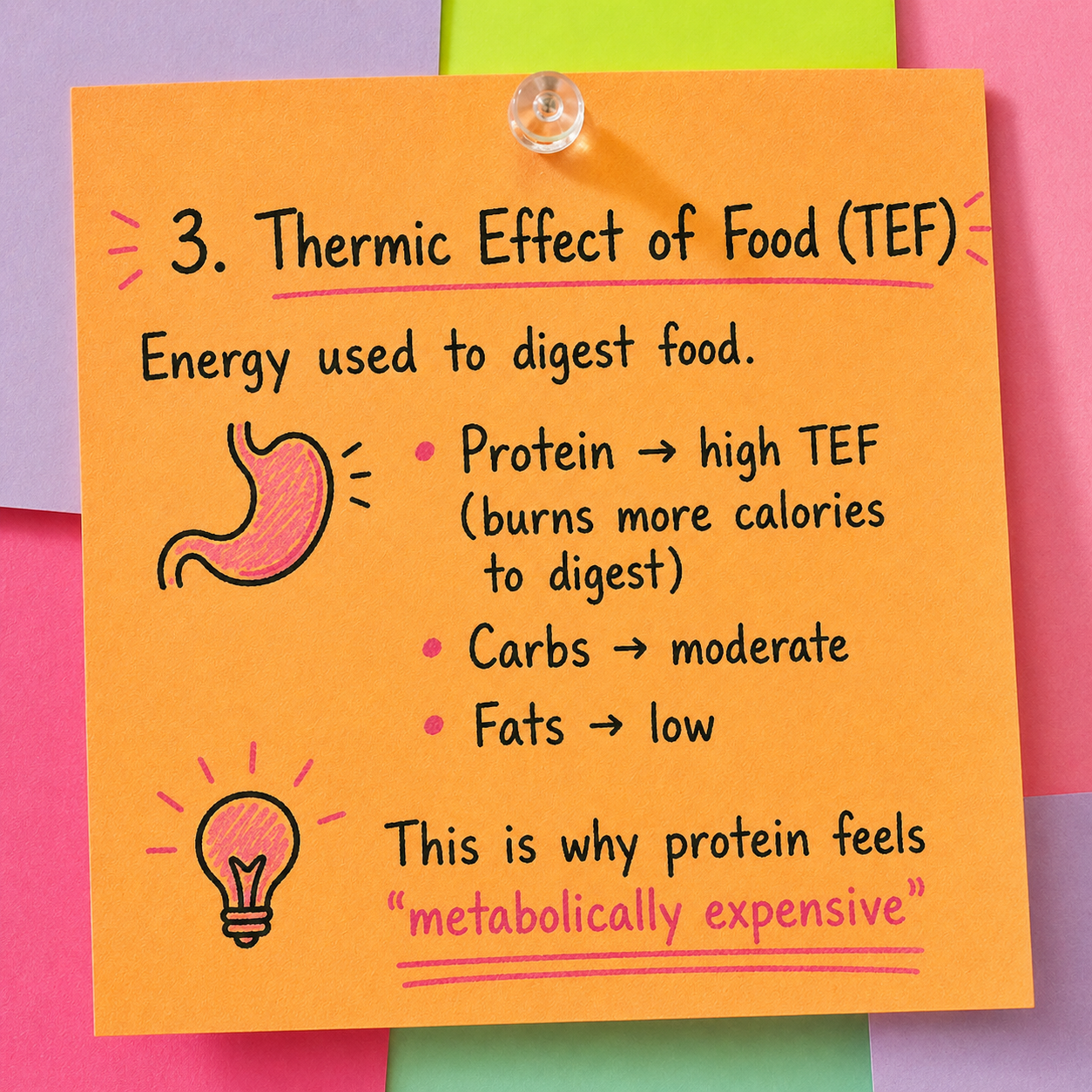
3. Thermic Effect of Food (TEF)
Energy used to digest food.
- Protein → high TEF (burns more calories to digest)
- Carbs → moderate
- Fats → low
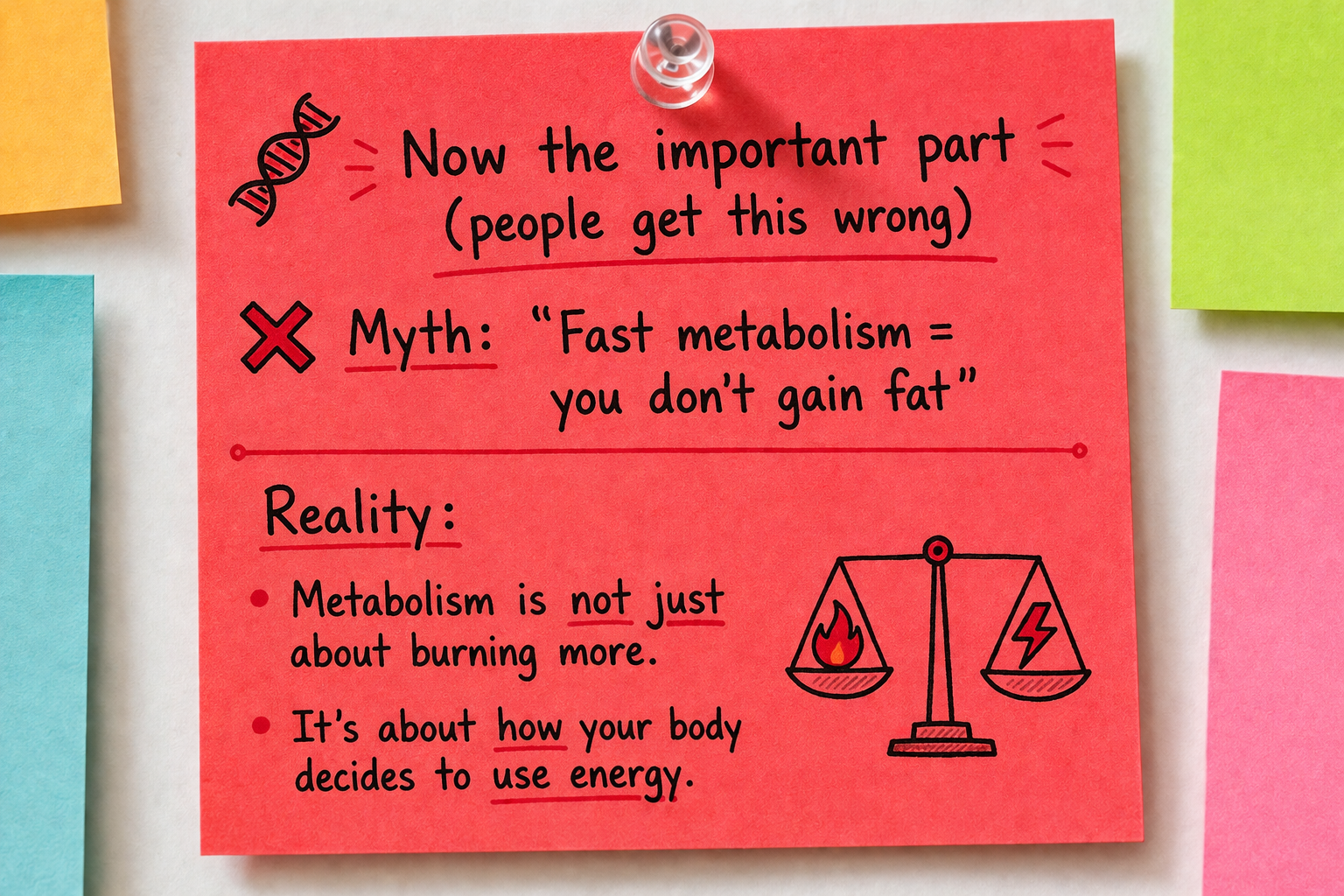
Myth: “Fast metabolism = you don’t gain fat”
✓ Reality:
Metabolism is not just about burning more.
It’s about how your body decides to use energy.
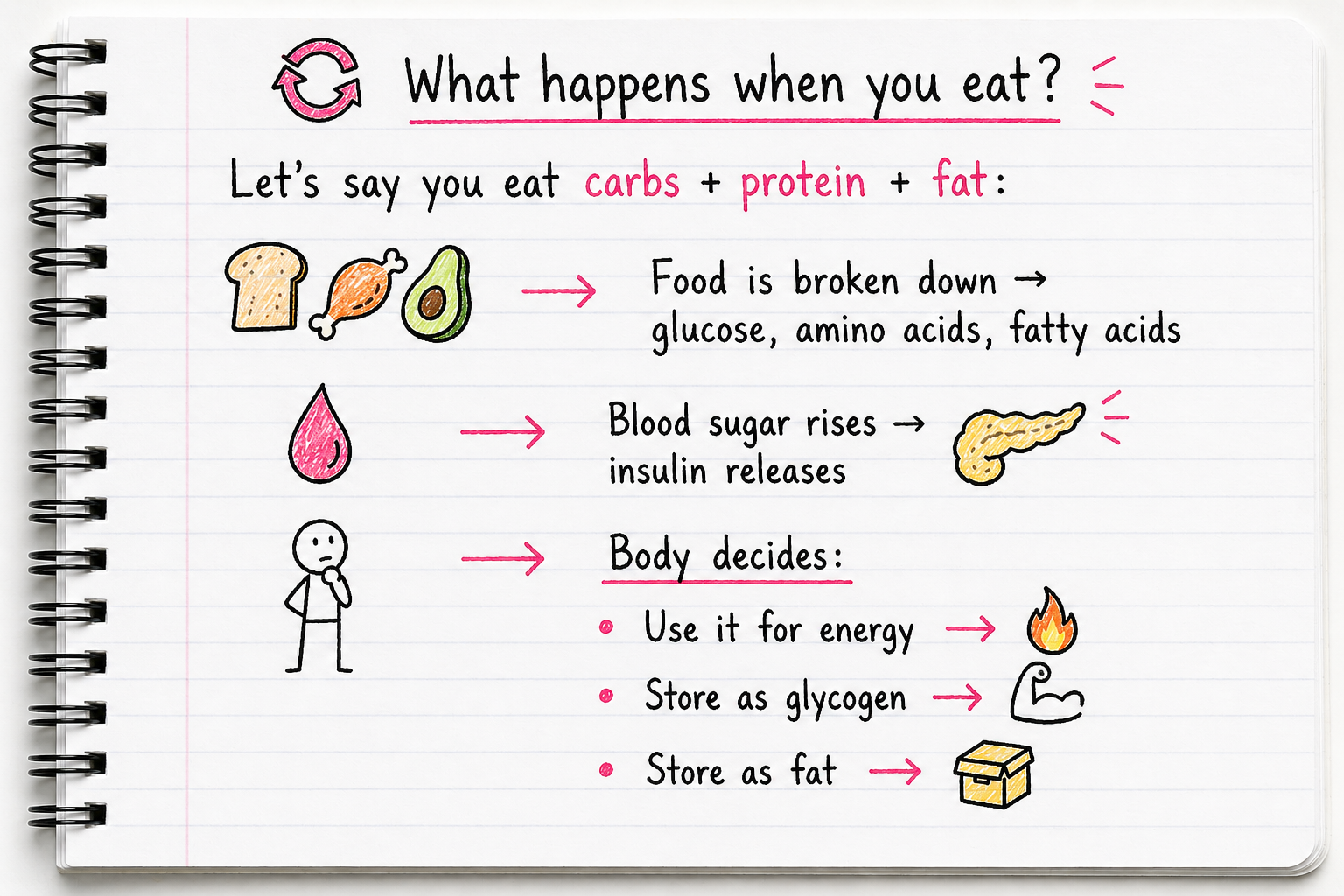
What happens when you eat?
Let’s say you eat carbs + protein + fat:
- 1 Food is broken down → glucose, amino acids, fatty acids
- 2 Blood sugar rises → insulin releases
- 3 Body decides:
- 🔥 Use it for energy
- 🏋️ Store as glycogen
- 📦 Store as fat
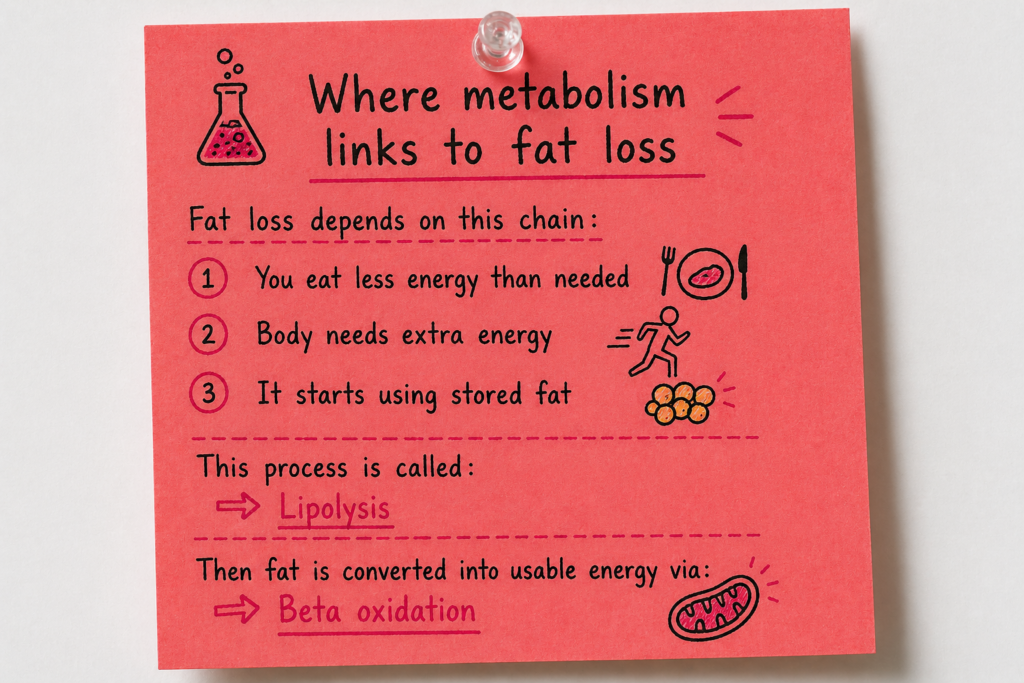
🧪 Where metabolism links to fat loss
Fat loss depends on this chain:
- You eat less energy than needed
- Body needs extra energy
- It starts using stored fat
This process is called:
👉 Lipolysis
Then fat is converted into usable energy via:
👉 Beta oxidation
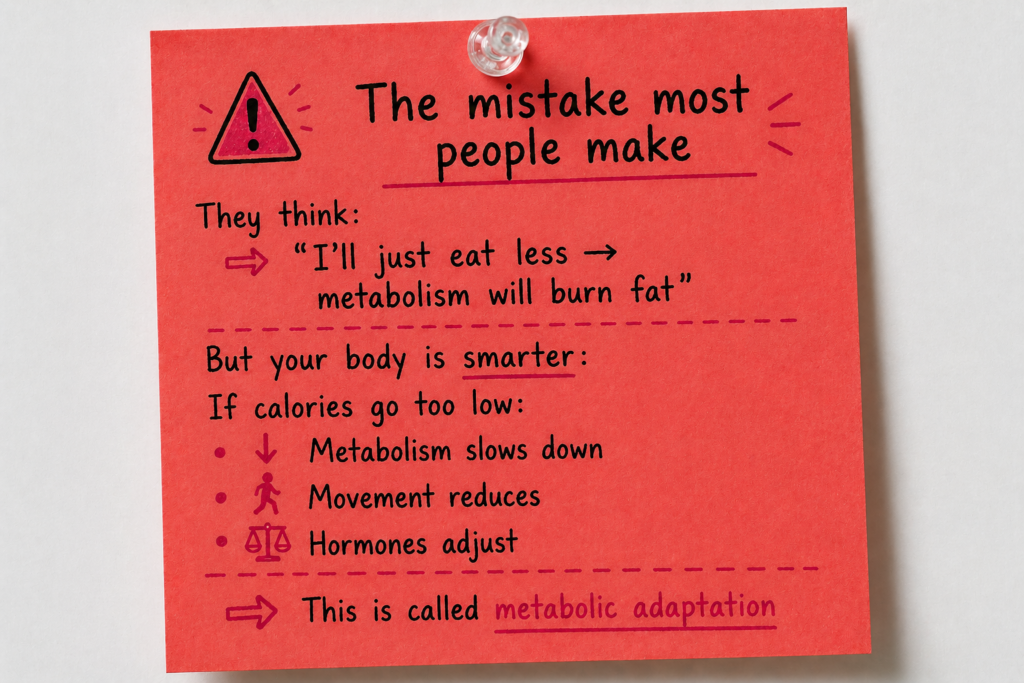
⚠️ The mistake most people make
They think:
👉 “I’ll just eat less → metabolism will burn fat”
But your body is smarter:
If calories go too low:
- Metabolism slows down
- Movement reduces
- Hormones adjust
👉 This is called metabolic adaptation
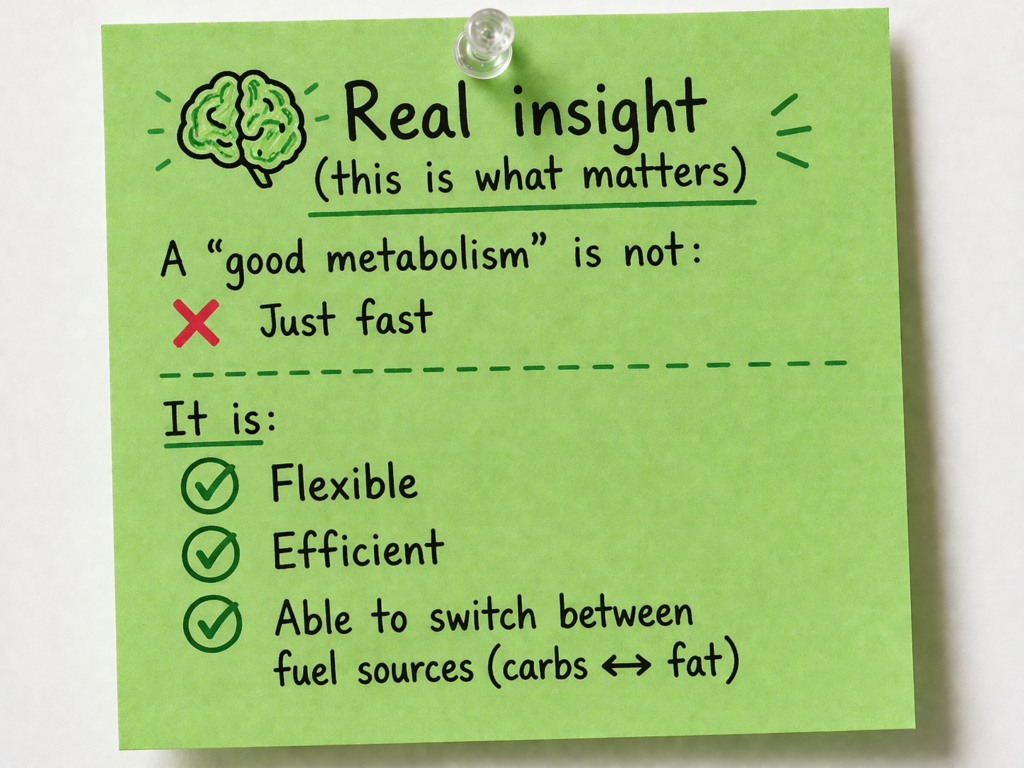
🧠 Real insight (this is what matters)
A “good metabolism” is not:
❌ Just fast
It is:
✔ Flexible
✔ Efficient
✔ Able to switch between fuel sources (carbs ↔ fat)
🧩 Simple example
Two people eat the same meal:
- Person A: active, more muscle → uses more energy
- Person B: sedentary → stores more
Same food. Different metabolic response.
Simple Metabolism Concept
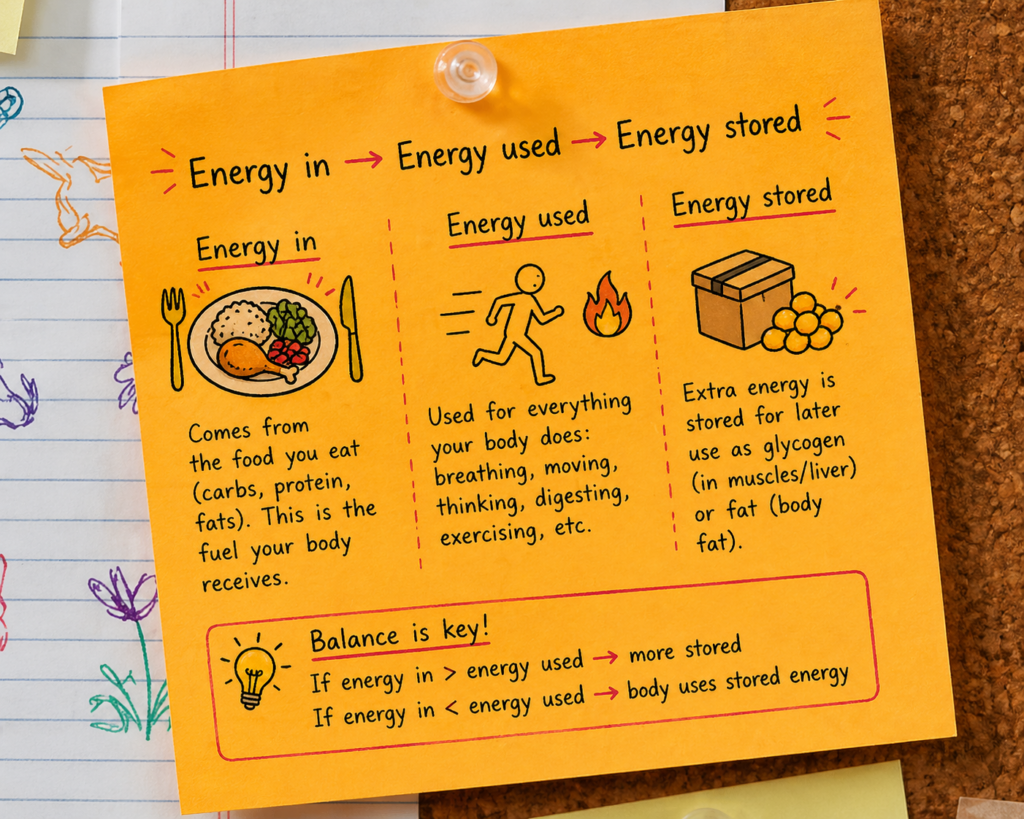
Energy in 🍽️ comes from the food you eat — carbohydrates, proteins, and fats. This is the fuel your body receives. Your body then uses this energy 🔥 for essential functions like breathing 🌬️, movement 🚶♀️, thinking 🧠, digestion 🍽️, and exercise 🏋️♀️. Since these processes are continuous, your body is always using energy — even at rest.
Any energy that is not immediately used gets stored 📦 for later. This happens in two main forms: glycogen (stored in muscles and liver) and body fat, which acts as a longer-term energy reserve.
- If energy in is greater than energy used → more energy is stored 📦
- If energy in is less than energy used → the body uses stored energy 🔥